My main field of philatelic specialty is the Hashemite Kingdom of Jordan. The following are some scans from my collection with historical and political explanations:
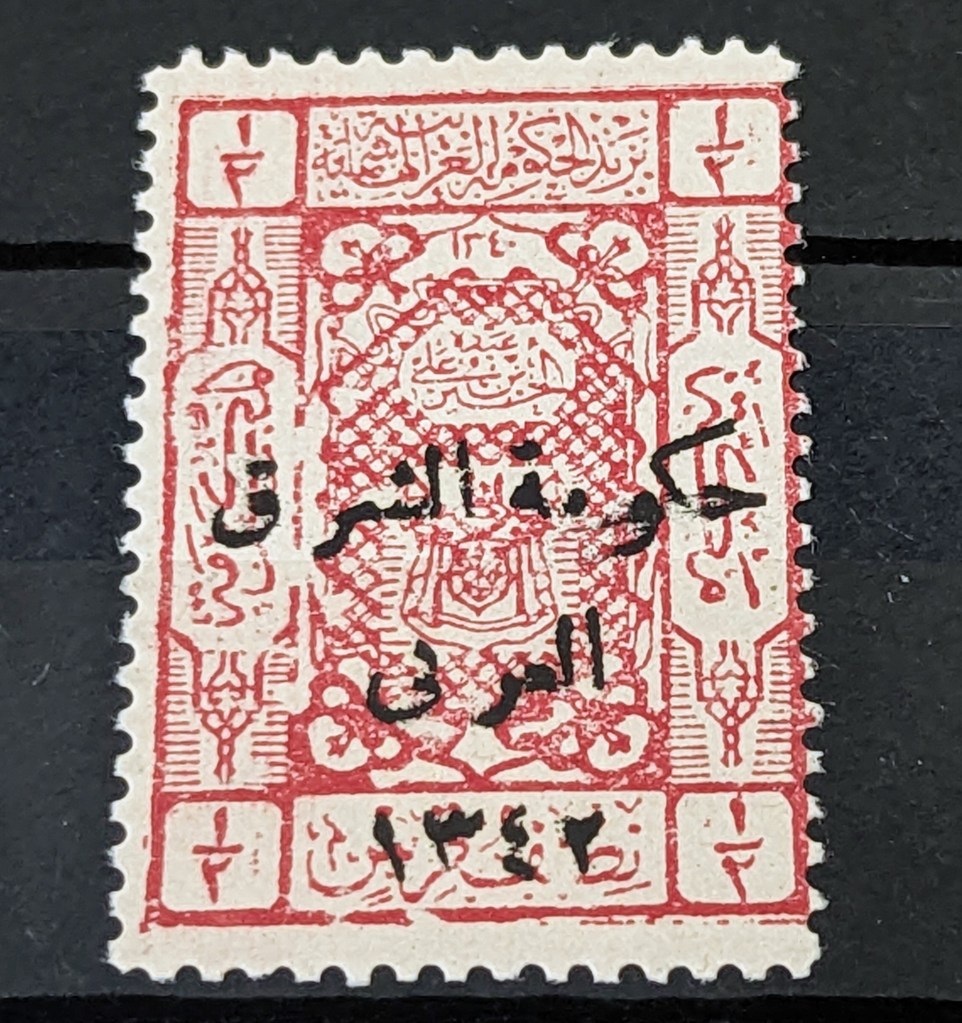
Stamps of Saudi Arabia, Overprint, “Government of the Arab East, 1342.” Overprinted issue on the stamps of the Hejaz issued in 1924. SG 127. In 1920 the British administration issued an EEF stamp with an overprinted Arabic inscription Sharqi Al Urdunn (East of Jordan). Before the establishment of Hashemite rule in Transjordan, these stamps referred to lands east of the Jordan River. In Transjordan, Palestinian, Hijazi and Syrian stamps were also used with the same inscriptions.
This is such an amazing stamp and the oldest one in my Jordanian collection!
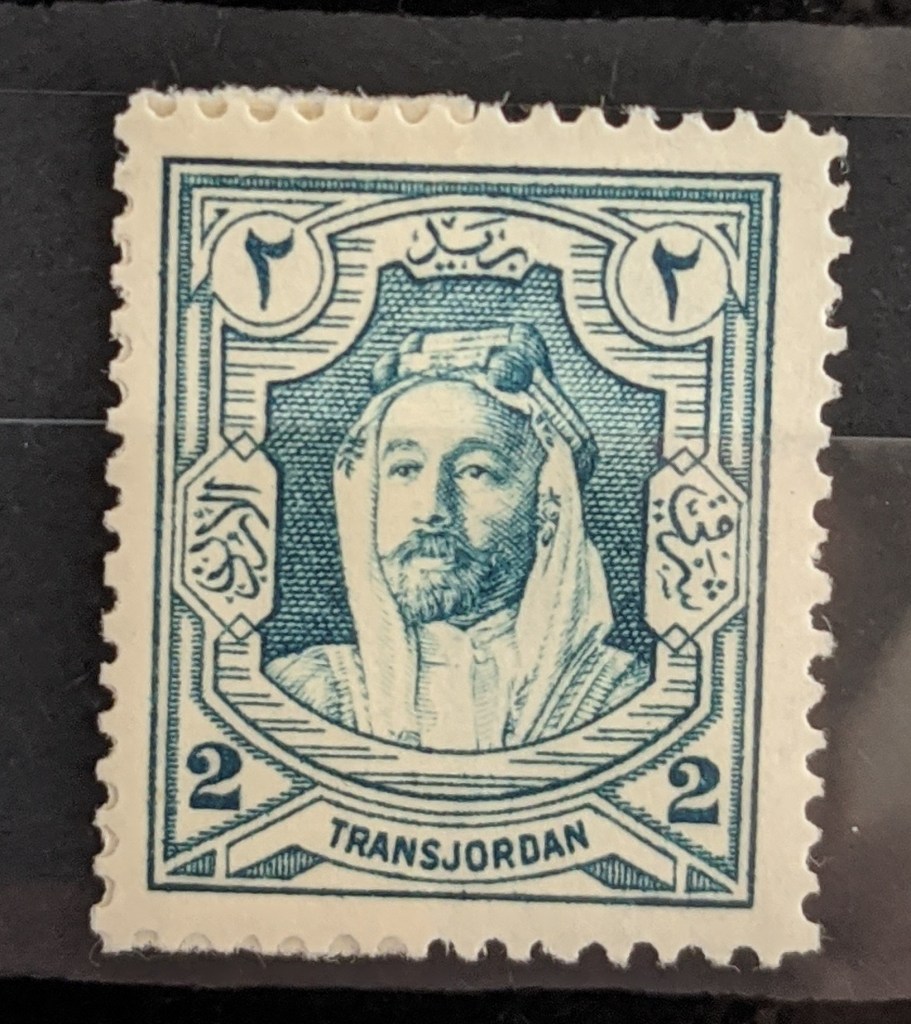
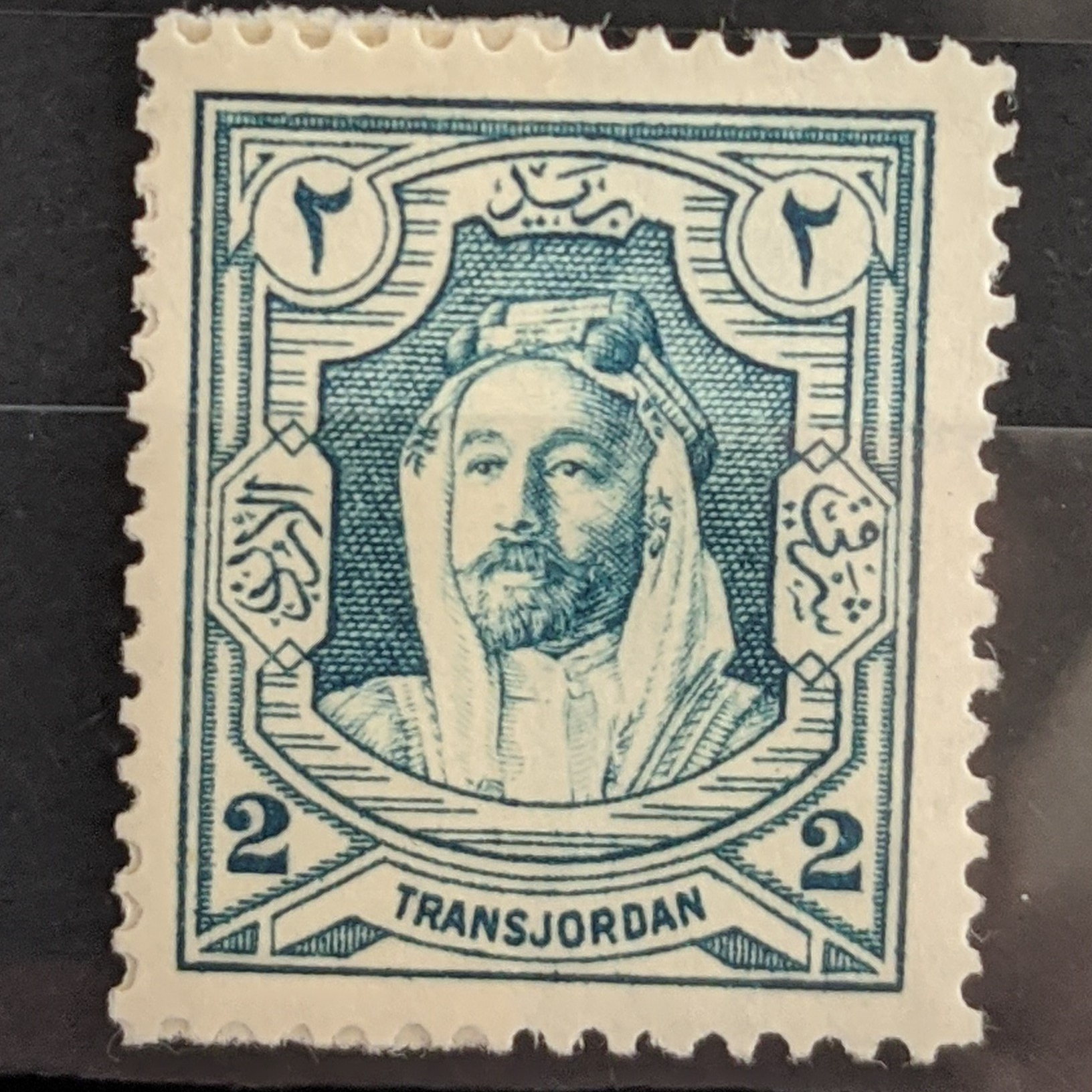
In 1927, Transjordan issued its first set of definitive postage stamps in the Palestinian currency (Millime). This stamp of Emir Abdullah who was the son of Sharif Hussein bin Ali, a Hashemite leader who ruled Mecca and Medina on behalf of the Ottoman Turks. Abdullah fought alongside Lawrence of Arabia against the Ottoman Empire during World War I.
In 1921 Abdullah and his Hashemite family helped found the Emirate of Transjordan, which would later become Jordan.
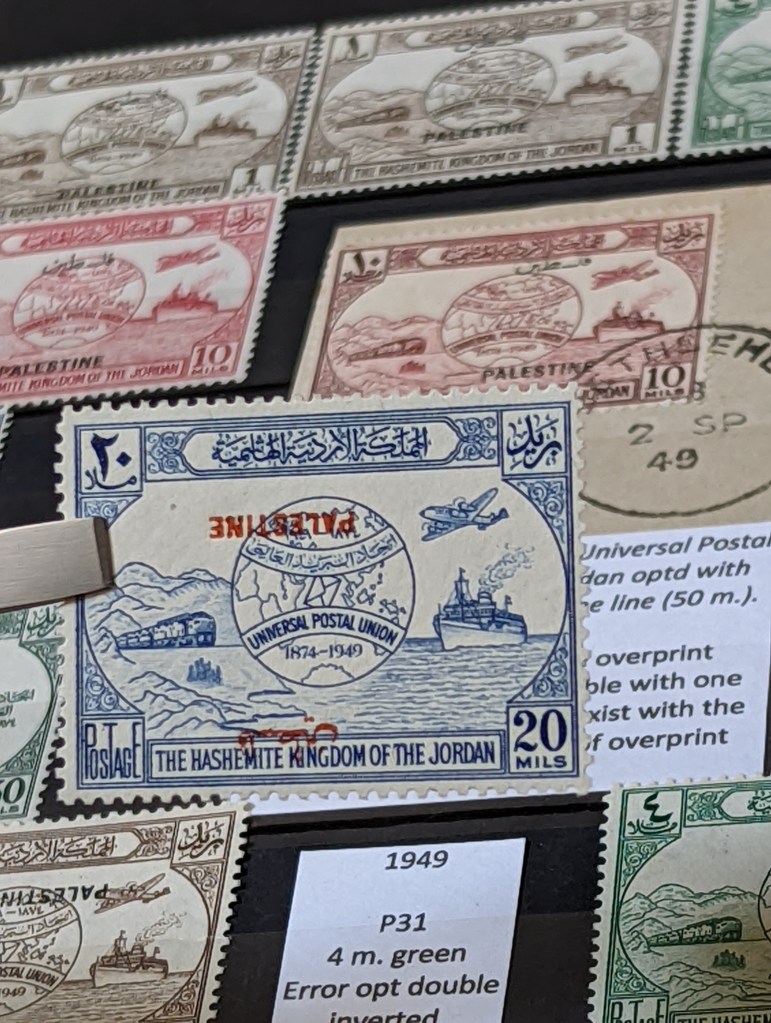
This beautiful 5-set series is one of my favorites! It celebrates the Universal Postal Union, which was established in 1874 and features a globe, airplane, train and ship. 75th Anniversary of Universal Postal Union issued by Jordan in 1949. SG P33 20 m. blue overprint double inverted.

Unification of Jordan and Arab Palestine. Issued by the Hashemite Kingdom of Jordan on April 1, 1952. SG 355. This nine-set definitive series includes the inscription “Commemorating the Unity of Jordan” in Arabic and English. Two significant religious and historical sites appear on both banks of the River: The Dome of the Rock in Jerusalem and al-Khazneh, a spectacular temple in Petra built by the Nabateans in the 3rd century.
On April 24, 1950, Jordan adopted a resolution known as “the decision of the unity of the two banks” which proclaimed complete unity between the West and East Bank of the Jordan River into one state, Jordan, under the leadership of King Abdullah bin al Hussain.
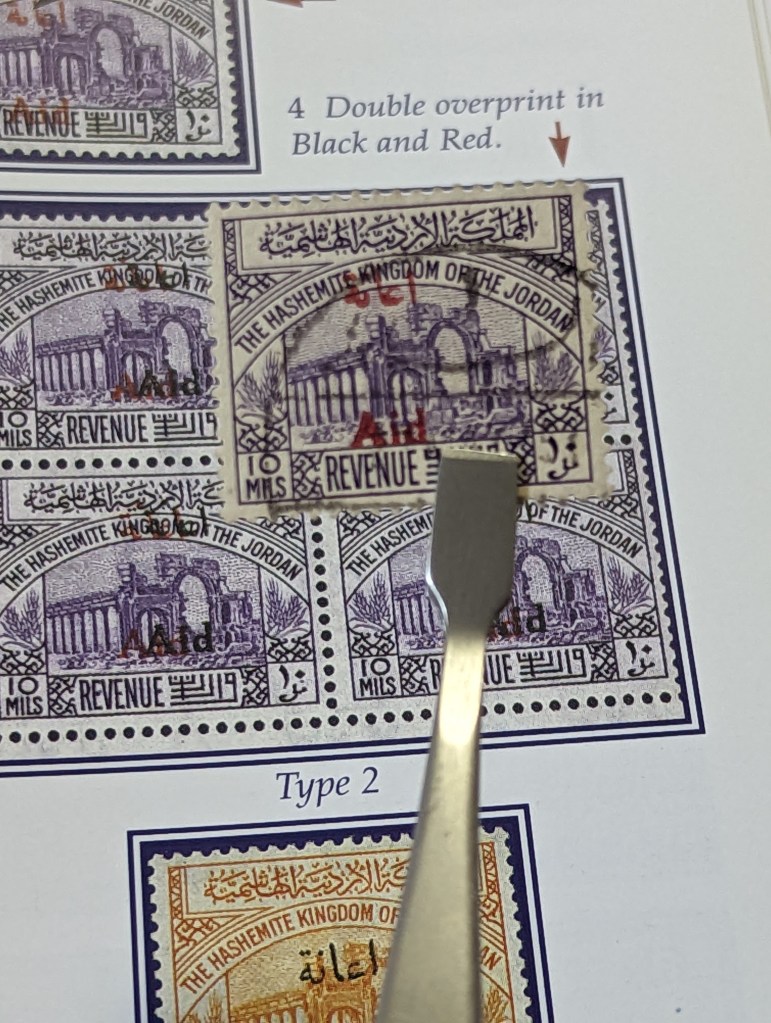
1950-51 “Aid” overprints on the Revenue stamps – Second issue. SG T296-300. Jordan issued a series of aid stamps beginning in 1947 to help raise funds for the Arabs of Palestine. The image depicts the ruins of Palmyra and the word “Aid” appears in Arabic and English.
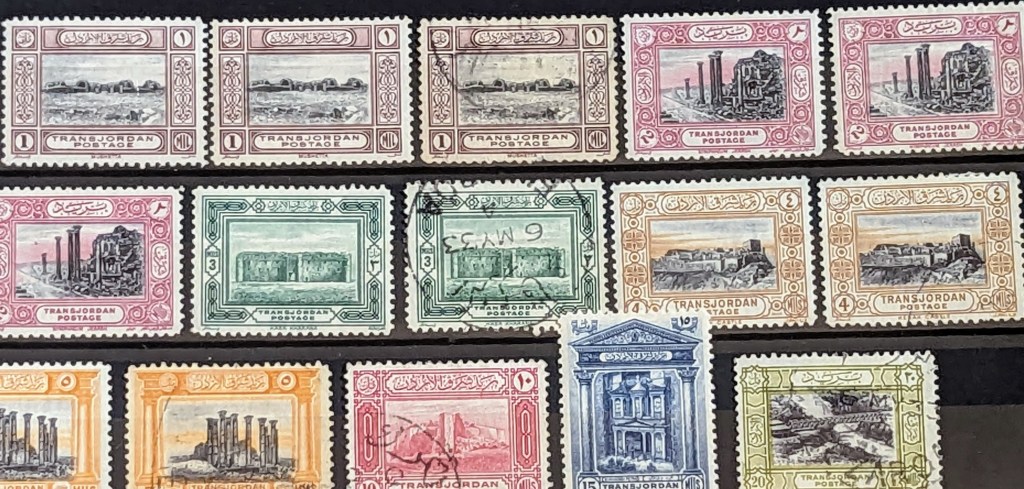
Another one of my favorite Jordanian stamp series!
This tourism set was issued in 1933 and designed to promote foreign tourism to Transjordan. Images depict Jerash, Kerak and Aljun Castle, Petra, and Allenby Bridge, among others. Yaqoub Youssef al-Sukkar was Jordan’s first stamp artist, and he earned an award for this series at a Florida exhibition in 1936.
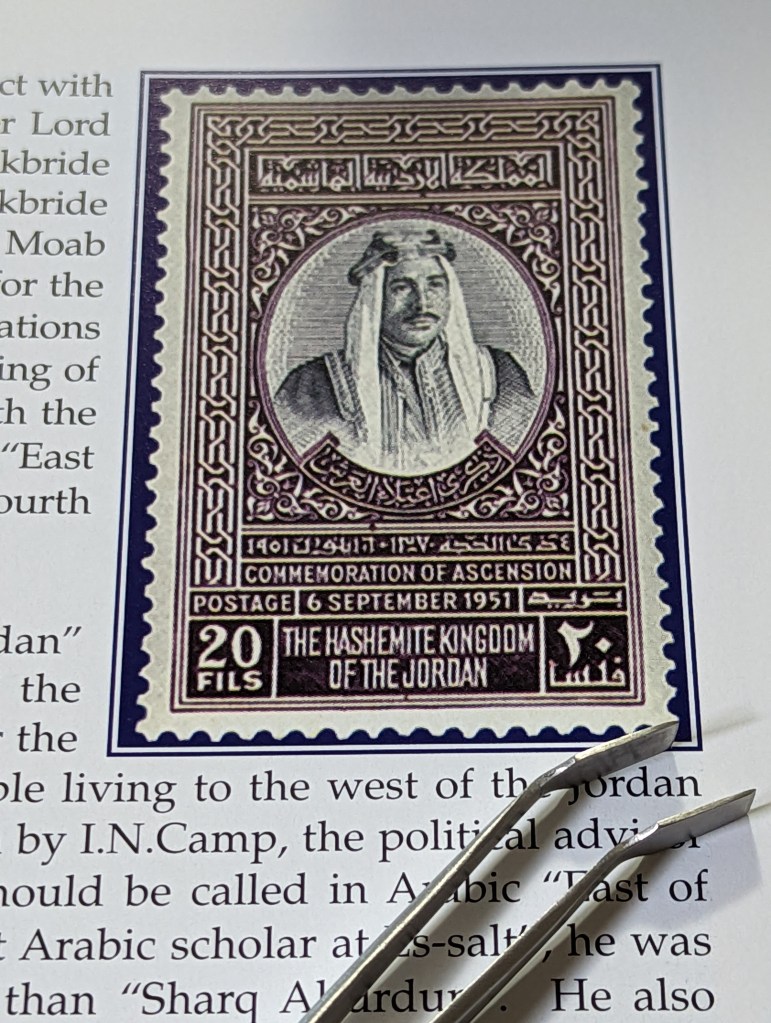
In 1951, King Talal assumed the throne in the Hashemite Kingdom of Jordan. However, his reign was cut short due to health issues and he abdicated just one year later. A Coronation postage stamp set was originally prepared but sent back to the printing house after he abdicated. Apparently, the stamps were sent to be incinerated and only a few survived. This set is one of the most valuable Middle Eastern philatelic collections.
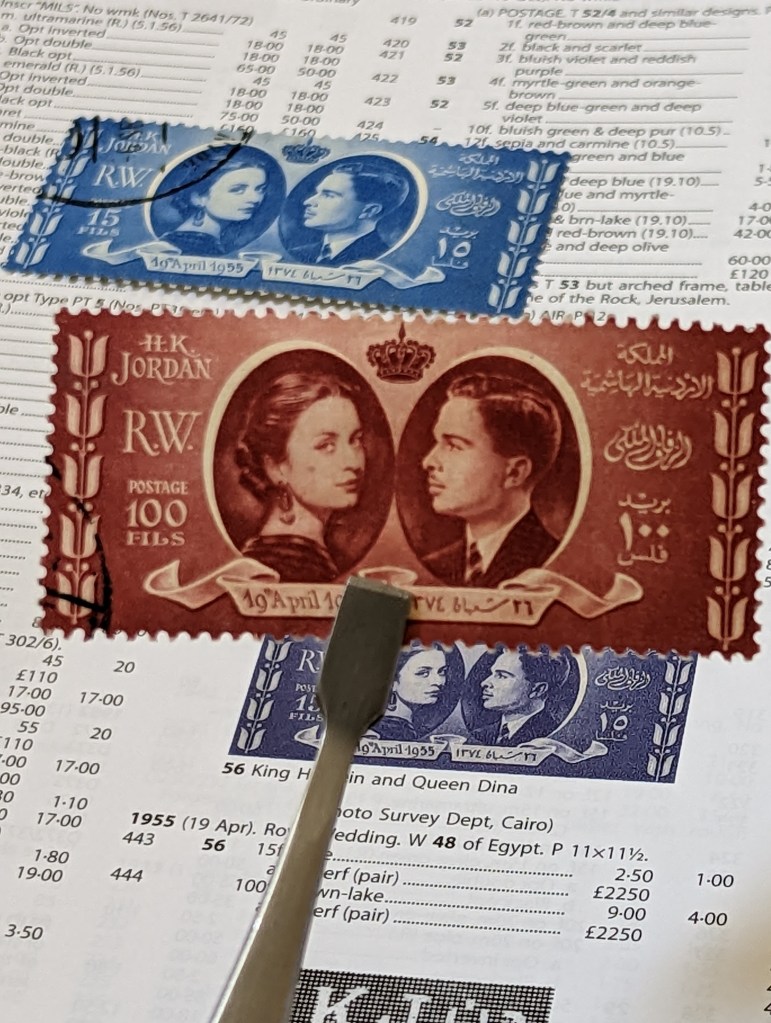
Royal Wedding of King Hussein and Queen Dina. Issued by the Hashemite Kingdom of Jordan in 1955. SG 443-44.
On April 19, 1955, King Hussein married his first wife, Dina bint Abdul-Hamid. Queen Dina was the first of four wives of King Hussein.
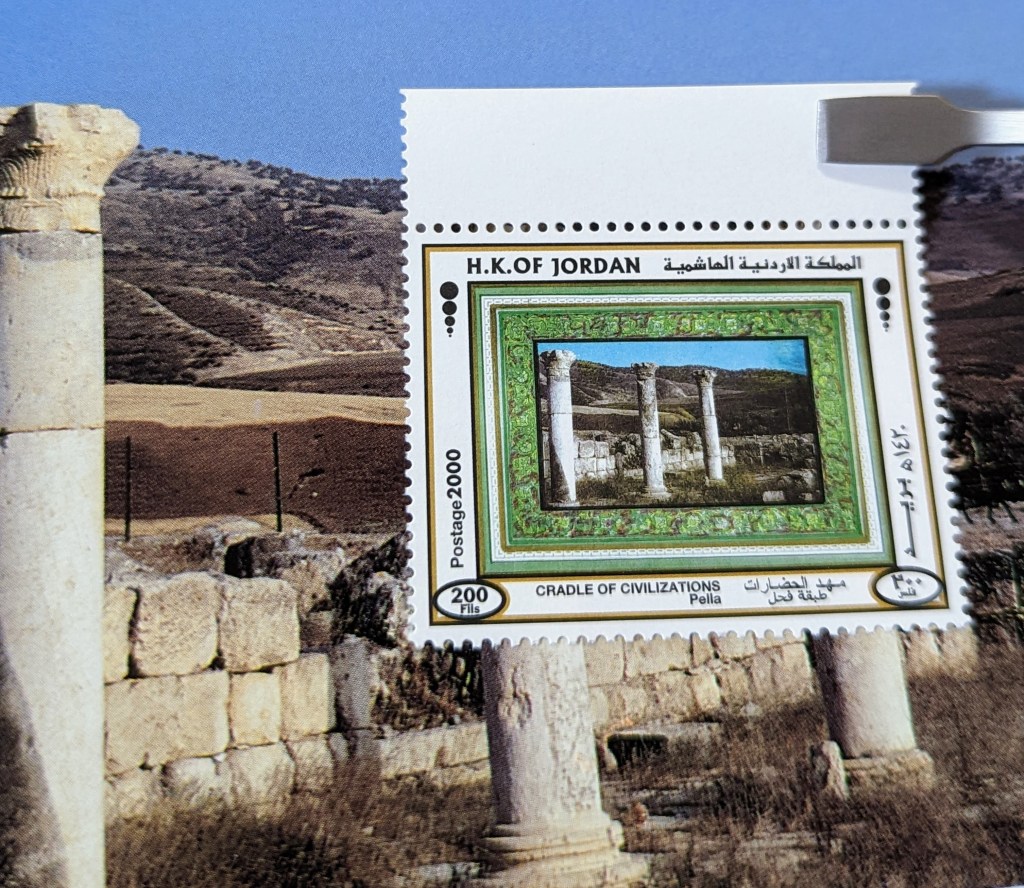
Cradle of Civilization – Pella. Issued by the Hashemite Kingdom of Jordan in 2000. SG 1929.
The ruins of Pella are near the village of Tabaqat Fahl, Irbid Governate. The city was founded in 310 BC by Alexander the Great.
 Let's Talk Stamps